- WhatsApp: 8613777772066
- Email: [email protected]


Snipping off perfectly good plastic fasteners during every routine maintenance run wastes money and leaves a mountain of plastic trash. For your business, swapping to releasable cable ties is a smart way to slash material costs on dynamic setups. This practical guide covers how these reusable systems operate and how they simplify your infrastructure management.

Before you can appreciate a smart, openable design, you have to look at the classic blueprint. To answer the basic question of how do cable ties work, you need to peek inside the tiny square head of a standard fastener.
The Teeth and the Track: A regular tie features a long, flexible tail covered in tiny, angled ridges. Inside the square head sits a tiny, angled plastic tooth called a locking pawl.
The One-Way Gate: As you feed the tail through the head, the flexible pawl rides over the ridges like a stick dragging along a picket fence. You hear that familiar click-click-click sound.
The Jamming Point: The moment you try to pull the strap backward, the angle of the ridges forces the internal pawl to bite down deeper into the plastic. It locks up instantly, and the only escape is cutting the strap with a pair of side snips.
Understanding these dynamics is essential whether you are deploying temporary locks or learning how to install cable ties correctly for permanent, heavy-duty industrial wiring layouts.
Expanding the Tool Kit: While this one-way system is brilliant for permanent structures, it becomes a massive headache on temporary projects. Over time, development led to an incredibly diverse list of types of cable ties tailored for specific jobs, including designs that let you reverse the lock without destroying the plastic.
So, how do you take a system designed to lock forever and make it open on command? The magic of releasable cable ties lies entirely in a tiny modification to the locking head.
The Extended Lever: Instead of hiding the locking pawl deep inside the head, these ties feature an extended tab that juts out from the square locking chamber. This tab acts as a miniature, finger-operated trigger.
Lifting the Tooth: When you press down on this tiny lever with your thumb or a fingernail, it acts as a lever. The motion physically tilts the internal pawl upward, lifting the locking tooth completely clear of the ridges on the strap.
Sliding Backward freely: With the internal pawl lifted, the mechanical friction drops to zero. The track becomes completely smooth, allowing you to pull the tail backward out of the head without any resistance.
Two Main Trigger Designs: You generally run into two styles in the field. Trigger-release versions let you press a lever with your bare fingers, making them perfect for fast adjustments. Slot-release versions require you to poke the tip of a tiny pocket screwdriver or a coin into a small slot to unlock the mechanism, which prevents accidental releases in crowded wire runs.
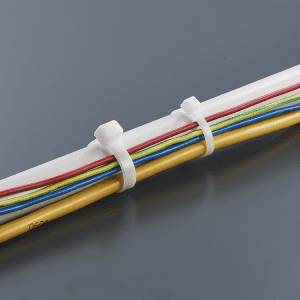
When planning a project layout, it helps to understand how these openable fasteners stack up against traditional single-use options.
Fatigue Resistance: Standard ties use rigid, brittle plastic formulations because they only need to flex once during installation. Quick release cable ties are engineered using highly resilient nylon blends that can bend, flex, and endure resetting dozens of times without snapping the crucial trigger mechanism.
The Lifespan Reality: A premium cable ties reusable releasable system can easily be opened and closed up to 50 times under normal indoor operating conditions before the structural plastic teeth begin to round off and lose their grip.
The Upfront Budget Investment: Yes, choosing releasable zip ties means paying a higher price per unit compared to basic single-use plastic bags. However, if your team modifies a layout five times during a project setup, a reusable tie pays for itself by eliminating tool labor and constant replacement waste.
| Performance Feature | Standard Cable Ties | Quick Release Cable Ties |
| Reusability Factor | Zero. Single-use only. Must be cut away and thrown into the trash. | High. Can be cycled open and closed dozens of times. |
| Tool Dependency | Requires side cutters or a pocket knife for removal. | Tool-free. Opens using your fingers or a small flathead tool. |
| Temporary Staging | Highly wasteful. Causes constant plastic scraps on the floor. | Perfect. Allows clean, waste-free adjustments. |
| Clamping Strength | Standard loop tensile strengths up to 50 lbs or more. | Equal strength capabilities, especially in heavy-duty grades. |
These openable fasteners are not just for light office cords. In heavy commercial and industrial settings, they solve massive operational headaches.
Temporary Power & Event Staging: Think about setting up heavy snake cables for temporary concerts, trade show booths, or construction power hubs. You need to secure the lines for a week, tear them down, and move them to the next site. Using heavy duty reusable zip ties saves hours of labor during pack-up.
Data Centers & Network Racks: During the early testing stages of a new server rack layout, technicians add, remove, and reroute fiber optic patch cords daily. Openable ties let you expand the bundle without risking a knife blade near live, delicate data lines.
Product Shipping and Protection: Manufacturers use these fasteners to lock down moving parts, doors, or heavy accessory hoses on machinery during transit. Once the equipment arrives at the customer’s site, the unboxing team clicks the tabs open cleanly without needing sharp blades.
High Load Capacity: Heavy industrial variants provide extra-wide straps and reinforced locking heads. This ensures they maintain reliable loop tensile strength, keeping heavy hydraulic lines pinned tight until you choose to unlock them.
To get the maximum return on your investment, you need to avoid a few common installation traps that can ruin a reusable fastener.
Forgetting the Solar Danger: If you take a standard, clear indoor reusable tie and leave it out on a rooftop solar project, the intense sun will destroy it. Always ensure your outdoor temporary runs utilize UV-stabilized dark formulations. Consult a comprehensive UV resistant cable ties guide to map out exact lifespan expectations for intense solar environments.
Over-Tensioning with Pliers: Never grab the tiny release trigger with a pair of heavy pliers to force it open. Excessive mechanical force will instantly snap the lever off the head, turning your expensive openable tie into a permanent, broken piece of plastic.
Allowing Grit and Dirt to Clog the Head: If your work site is covered in blowing sand, wet cement dust, or thick mechanical grease, these particles can settle into the open trigger channel. Once the debris hardens, it can jam the pawl in place, making it impossible to press the release button.
Trusting Them in High-Security Areas: Because these fasteners are designed for quick, tool-free opening, you should never use them on perimeter fencing, critical safety guards, or tamper-evident logistics boxes where you want to prevent unauthorized access.
How do you undo or release a releasable zip tie?
Press down on the small protruding lever on the locking head with your thumb and pull the strap backward.
Do heavy duty reusable zip ties have less holding strength than regular ones?
No. Heavy-duty openable versions match the high loop tensile ratings of standard permanent ties.
How many times can you realistically reuse a quick release cable tie?
Under normal conditions, a quality nylon reusable tie can easily be opened and closed 50 or more times.
Can any type of cable tie be unlocked without cutting?
Standard ties require a pin to lift the pawl, but only designated releasable versions have a built-in trigger.
Are there metal versions of quick release cable ties?
Yes. Certain stainless steel versions use a fold-over buckle design that can be opened up for adjustments.
Integrating releasable cable ties into your daily business operations stops material waste, cleans up your job sites, and saves hours of tedious maintenance labor. Investing in high-grade, smart line management pays off across every shifting project layout. Contact the BOESE team today to get direct factory wholesale pricing on your bulk fastener orders!

Modern enterprise integrating R&D, production, sales and service
Privacy Policy | Sitemap
Copyright BOESE Co.,Ltd SUPPORT BY :JUNJ
 Optimized by Seraphinite Accelerator