- WhatsApp: 8613777772066
- Email: [email protected]


Think of a cable tie as the “industrial duct tape”—it’s the go-to fix for almost everything. But to define cable tie simply as a plastic strip is an understatement. For your business, a proper cable tie installation is the backbone of safety and organization, turning a chaotic mess of wires into a sleek, professional system.
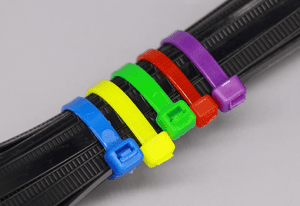
Before you pull your first strap tight, you need to know what’s in your toolbox. What is a cable tie if not a tailored solution for a specific problem? Not all ties are created equal, and picking the wrong material is like using a paperclip to hold a bridge together.
Self-Locking Nylon Cable Ties: These are the workhorses. Reliable, flexible, and perfect for 90% of indoor bundling.
Stainless Steel Cable Ties: When things get hot or corrosive, plastic just won’t cut it. These are built for the “tough” jobs in oil rigs or chemical plants.
Plastic Security Seals: These look like ties but act like locks. They are essential for logistics to show if a container has been tampered with.
Specialty Head Ties: Whether it’s a Push Mount, Edge Clip, or Mountable Head, these ties don’t just bundle—they fix the wires directly to a car chassis or a control panel.
Releasable & Beaded Ties: Perfect for temporary setups where you’ll need to add or remove cables later without reaching for the scissors.
It’s tempting to just “zip and go,” but professional cable tie installation is a precise task that directly impacts your bottom line. Here is why doing it right matters:
Protecting Your Equipment: If a tie is too loose, cables rub against each other, leading to insulation wear. Conversely, if it’s too tight, you risk crushing delicate internal components like fiber optics.
Ensuring Tension Consistency: In a professional setting, uniformity is key. Using a cable tie installation tool (or tie gun) ensures every bundle in your facility has the exact same tension, eliminating the guesswork of manual pulling.
Preventing Worker Fatigue: Manually tightening hundreds of ties is brutal on the hands. A professional tool saves your team from repetitive strain injuries and speeds up the workflow.
Slashing Troubleshooting Time: A tidy, well-supported cable support system isn’t just about aesthetics. It’s the difference between identifying a fault in five minutes or wasting five hours digging through a “rat’s nest” of wires.
Long-Term Reliability: Correct installation prevents “creep” and material fatigue, ensuring your business doesn’t face unexpected downtime due to snapped ties or sagging lines.
The first secret to a successful install is the “Environment Check.” You wouldn’t wear a tuxedo to a construction site, and you shouldn’t use standard nylon cable ties in the engine bay of a truck.
Check the Temperature: For high-heat areas, look for heat-stabilized nylon or stainless steel cable ties.
UV Exposure: If your project is outdoors, standard white ties will turn yellow and snap like crackers within months. Always go with UV-stabilized black ties for the “open sky.”
Chemical Resistance: In food processing or marine environments, PVC or Epoxy coated stainless steel ties offer that extra layer of protection against salts and acids.
The Weight Factor: Match the “Tensile Strength” (measured in lbs or kgs) to the weight of your bundle. Don’t ask a small 18lb tie to hold up a heavy industrial conduit.
At a Glance: Choosing the Best Cable Tie for Your Environment
| Environment | Recommended Material | Key Advantage |
| Standard Indoor | Self-Locking Nylon 66 | Cost-effective and flexible |
| Outdoor / Solar | UV-Stabilized Nylon | Resists cracking from sunlight |
| High-Heat (Engine Bay) | Heat-Stabilized Nylon | Maintains strength up to 125°C |
| Marine / Corrosive | Stainless Steel (Epoxy Coated) | Saltwater and acid resistance |
| High Vibration | Nylon Metal Barb / Anti-Skid | Prevents the lock from slipping |
| Logistics / Cargo | Plastic Security Seals | Tamper-evident and serial-numbered |
Now, let’s get to the “action.” Before you even touch a tie, you need to organize the “path.” How to use cable ties effectively starts with a clean layout.
Pre-Sorting: Lay your cables side-by-side. Avoid “criss-crossing” them like a braid; you want them to sit parallel.
Space Management: In the world of cable ties for cars, space is a luxury. Use Edge Clip cable ties to snap onto the thin metal ridges of the car body, or Push Mount ties to pop into pre-drilled holes. This keeps the wires away from moving parts or hot exhaust pipes.
Marker Ties: If you have twenty identical black ethernet cables, use Marker cable ties. These have a small flat surface where you can write labels, saving you from a massive headache later during maintenance.
Organization is the first step to a reliable installation. However, for a complete cable management strategy, bundling with ties is often just one part of the job—you also need to secure those bundles to the structure itself. For a deep dive into wall-mounting techniques and clip varieties, check out our comprehensive Cable Clips Types and Installation Guide for Professional Wiring to ensure every inch of your run is supported correctly.
This is where the magic happens. Threading a tie feels intuitive, but there’s a professional rhythm to it.
The “Fish Bone” Method: Some specialized heads, like the Fish Bone Shape head cable ties, are designed to lock in multiple positions. Slide the tail through the head until you hear that satisfying zip-zip-zip.
The Snugness Test: Pull the tie until it is “snug” but not “choking” the wires. You should be able to just barely rotate the tie around the bundle with your fingers. If the wire jacket looks pinched or deformed, you’ve gone too far.
Using the Tool: If you’re using a cable tie installation tool, set the tension dial to the recommended level for your tie size. Squeeze the trigger, and the tool will pull the tie to the perfect tightness and cut it automatically.
This is the most skipped step, and it’s the most dangerous one to ignore. We’ve all been there—reaching into a machine and getting a deep, nasty scratch from a sharp tie “tail.”
The “Flush” Cut: Never leave a 1-inch tail sticking out. And never, ever cut the tail at an angle with standard scissors. This creates a tiny plastic “razor blade.”
The Right Tool: Use a flush-cutter or the built-in blade of your installation gun. The cut should be perfectly flat against the head of the tie.
Professional Pride: A flush-cut tail shows that your business values quality. It’s the difference between an amateur “DIY” job and a high-end industrial installation.
Even pros make mistakes. Here’s what to look out for so your business stays safe:
Mixing Up Nylon 66 vs. Nylon 12: Using the wrong grade of plastic for the temperature can lead to “brittle failure” where the ties just shatter.
Over-Tensioning Fiber Optics: Fiber is glass. If you squeeze it too hard, you’ll cause “micro-bends” that slow down your internet or kill the signal entirely.
Ignoring the “Bend Radius”: Don’t force a cable into a 90-degree turn using a tie. Cables need a gentle curve to stay healthy.
Leaving the Sharp Tail: As mentioned, a sharp tail is a safety hazard for the next technician.
Reusing Non-Releasable Ties: Trying to “pick” the lock of a standard tie with a screwdriver weakens the pawl inside. If it’s not a releasable cable tie, just cut it and use a new one.
The cable ties uses are endless, stretching from the bottom of the ocean to the dashboard of your car.
Automotive Engineering: High-vibration environments demand Anti-Skid ties or Handcuff zip ties that won’t budge. Car manufacturers rely on Edge Clips to route sensor wires through tight engine bays without using messy adhesives.
Heavy Infrastructure: In bridges and tunnels, PVC coated stainless steel cable ties handle the moisture and heavy loads that would snap plastic in a week.
Logistics & Retail: Plastic security seals are used to lock truck doors and high-value cargo. They provide a “tamper-evident” trail that is vital for insurance and security.
Marine & Coastal: Saltwater is the enemy of metal. This is where Epoxy coated ties shine, providing the strength of steel with a shield against the ocean’s salt.
What are cable ties used for in high-vibration machines?
Heavy-duty machines use Nylon Metal Barb ties or stainless steel cable ties to prevent the lock from slipping under vibration.
How do I choose between PVC and Epoxy coated steel ties?
Epoxy is thinner and more flexible; PVC is thicker and provides better “cushioning” for delicate wires. Both offer excellent corrosion resistance.
Can I use standard nylon ties in my car‘s engine bay?
Only if they are “Heat Stabilized.” Standard nylon will melt or become brittle near the engine block.
Is a cable tie installation tool worth the money?
If you are installing more than 50 ties a day, yes. It prevents injury and ensures a professional finish every time.
Whether you are a top cable tie manufacturer in China or a local contractor, the goal is a secure, safe connection. Mastering how to use cable ties is a small detail with a massive impact on project longevity. Ready to upgrade? Choose the right tie, pull it snug, and cut it flush. Contact BOESE today for premium bulk solutions!

Modern enterprise integrating R&D, production, sales and service
Privacy Policy | Sitemap
Copyright BOESE Co.,Ltd SUPPORT BY :JUNJ
 Optimized by Seraphinite Accelerator