- WhatsApp: 8613777772066
- Email: [email protected]


Leaving standard plastic fasteners out in the sun is a recipe for disaster. For your business, understanding how long do zip ties last outside means the difference between a secure installation and a costly repair job. This practical guide covers how intense sunlight impacts your wiring and how choosing proper UV resistant cable ties keeps your infrastructure standing strong.
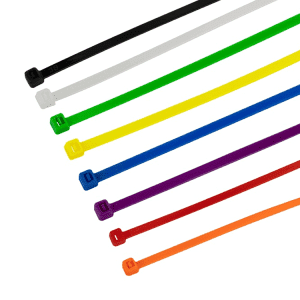
If you grab a handful of standard, clear nylon ties and use them on an outdoor project, you are running on borrowed time. The sun is incredibly brutal to raw plastics, and the clock starts ticking the moment your installation hits the daylight.
The Quick Crash: Standard white or natural nylon ties usually last less than a year outdoors. In areas with intense, direct sunlight, they can degrade, turn yellow, and snap in as little as six months.
The UV Resistant Cable Ties Lifespan: On the flip side, professional UV resistant nylon cable ties are built to take a beating from the sun. You can realistically expect them to last anywhere from 7 to 12 years before they show signs of structural weakness.
The Molecular Attack: Sunlight emits ultraviolet rays that slowly chop up the molecular chains inside the plastic. It is a quiet process. The tie looks perfectly fine on Tuesday, but on Wednesday, it completely loses its flexibility and gives out under the slightest weight.
To understand why standard ties fail, look at how sunlight interacts with unprotected polymers. When regular nylon sits under the sun, it undergoes a destructive chemical reaction called photo-oxidation.
Losing the Moisture Balance: Nylon naturally loves to absorb a tiny bit of water from the air to stay flexible. Intense UV rays bake that moisture out, locking the plastic into a permanently dry, stiff state.
The Desert and Roof Problem: High ambient heat acts like an accelerator. If your ties are installed on a scorching metal rooftop or a desert solar array, the heat combined with UV creates a massive stress point that speeds up plastic decay by two or three times.
Micro-Cracking: As the sun beats down during the day and the air cools off at night, the plastic expands and contracts. Unprotected nylon develops microscopic cracks across its surface, especially around the locking head, causing the whole tie to snap under load.
| Material Grade | Expected Lifespan in Direct Sun | Primary Outdoor Behavior | |
| Standard Nylon 66 (White) | 6 to 12 Months | Turns yellow quickly, loses flexibility, and snaps easily. | |
| Weather Resistant Nylon 66 (Black) | 7 to 12 Years | Resists surface cracking and maintains a strong hold for years. | |
| Specialty Polymers (Nylon 12 / Weatherproof) | 12 to 15+ Years | Excellent performance in salty, wet, or extremely hot coastal zones. | |
| Stainless Steel Fasteners | 20+ Years | Immune to solar radiation, completely flameproof, and indestructible. |
You might notice that almost all outdoor-rated fasteners come in black. There is a very practical, non-aesthetic reason for this design choice.
The Power of Carbon Black: During the manufacturing process, a precise amount of carbon black dispersion is mixed directly into the nylon resin. This additive works exactly like a physical shield, absorbing the harmful ultraviolet rays and turning them into harmless heat before they can damage the plastic core.
Surface vs. Core Protection: Cheap black ties are sometimes just dyed on the outside to save money. True heavy duty UV resistant zip ties have the protective stabilizers cooked all the way through the material, so even if the surface scratches, the tie stays strong.
Engineering a Secure Lock: The internal locking pawl is the most vulnerable part of any fastener. Proper outdoor variants ensure that the tiny teeth inside the head maintain their shape and grip, even when the outer strap is exposed to continuous baking sun. For highly reliable routing, a standard approach relies on self-locking nylon cable ties built to snap into place and hold fast under pressure.
You do not want to wait for a heavy bundle of wires to come crashing down before you realize your fasteners are dead. Regular walk-throughs can help your business catch issues early.
The Chalking Effect: If you run your finger along a black tie and it leaves a powdery, white residue on your skin, the plastic is degrading. This chalking means the carbon black shield is breaking down, and the inner nylon is now defenseless against the sun.
Color Fading and Bleaching: Keep an eye out for deep black ties turning into a dull, ashy gray. For any remaining clear or colored ties, a deep yellow tint is a clear warning sign that the plastic has oxidized and turned brittle.
Deep Surface Cracks: Look closely at the bent sections of the tie or right around the locking head. If you spot tiny, hair-like fractures along the strap, the structural integrity is already gone. The next big gust of wind will likely snap it.
Sagging and Creep: When ties get overwhelmed by heat and sun, they slowly stretch out without breaking. If your bundles are drooping or sliding out of their original positions, your outdoor cable management setup is losing its grip and needs an upgrade.
Selecting the right tie requires matching your environmental challenges with the right product specifications. Do not just look at the price tag; focus on the application requirements.
Check the Tensile Strength: Heavy cables sway in the wind, which puts massive mechanical stress on the fasteners. Always opt for heavy-duty options that provide a wider strap and a higher loop tensile strength to handle both the weight and the wind load.
Look for Specific Certifications: Ensure the product labels clearly state UV-stabilized or weather-resistant ratings. If your business operates in public spaces, transit tunnels, or high-risk zones, you should also look for flame-retardant certifications to prevent fire spread.
Incorporate Security Features: For outdoor infrastructure exposed to the public, such as telecom boxes or perimeter fencing, using specialized security cable ties helps prevent tampering. These tamper-evident designs ensure that unauthorized personnel cannot easily open or alter your wiring setups without leaving obvious signs of damage.
Can I use standard white nylon zip ties outside?
Only for temporary, short-term setups. They will degrade, turn brittle, and snap within a few months under direct sun.
Are all black cable ties automatically UV resistant?
No. Some are simply colored with black dye. Always confirm they contain carbon black or UV-stabilized additives.
How long do heavy duty UV resistant zip ties last in hot deserts?
High-quality UV-stabilized ties typically handle the intense heat and sun for 7 to 10 years before requiring replacement.
What happens to security cable ties when exposed to long-term UV?
The locking mechanism weakens over time, making it easy for intruders to snap or bypass the tie without tools.
Is there a material that lasts longer than UV-stabilized nylon outdoors?
Yes. Stainless steel ties provide the ultimate outdoor longevity, lasting over 20 years without any UV or heat degradation.
Skimping on your outdoor fasteners always leads to headaches, unexpected downtime, and expensive maintenance runs. Investing in proper UV resistant cable ties keeps your infrastructure safe from the elements for a decade or more. Ready to secure your next major installation with field-tested components? Contact the BOESE team today to get a custom quote for your industrial supply needs!

Modern enterprise integrating R&D, production, sales and service
Privacy Policy | Sitemap
Copyright BOESE Co.,Ltd SUPPORT BY :JUNJ
 Optimized by Seraphinite Accelerator