- WhatsApp: 8613777772066
- Email: [email protected]


Keeping thousands of data wires, hydraulic hoses, and industrial lines organized is a massive challenge for any expanding operation. Choosing the wrong binding gear leads to sagging infrastructure, snapped bundles, and expensive production downtime. This definitive selection guide breaks down different types of cable ties, their mechanical material limits, and how to pick the perfect strength for your facility.

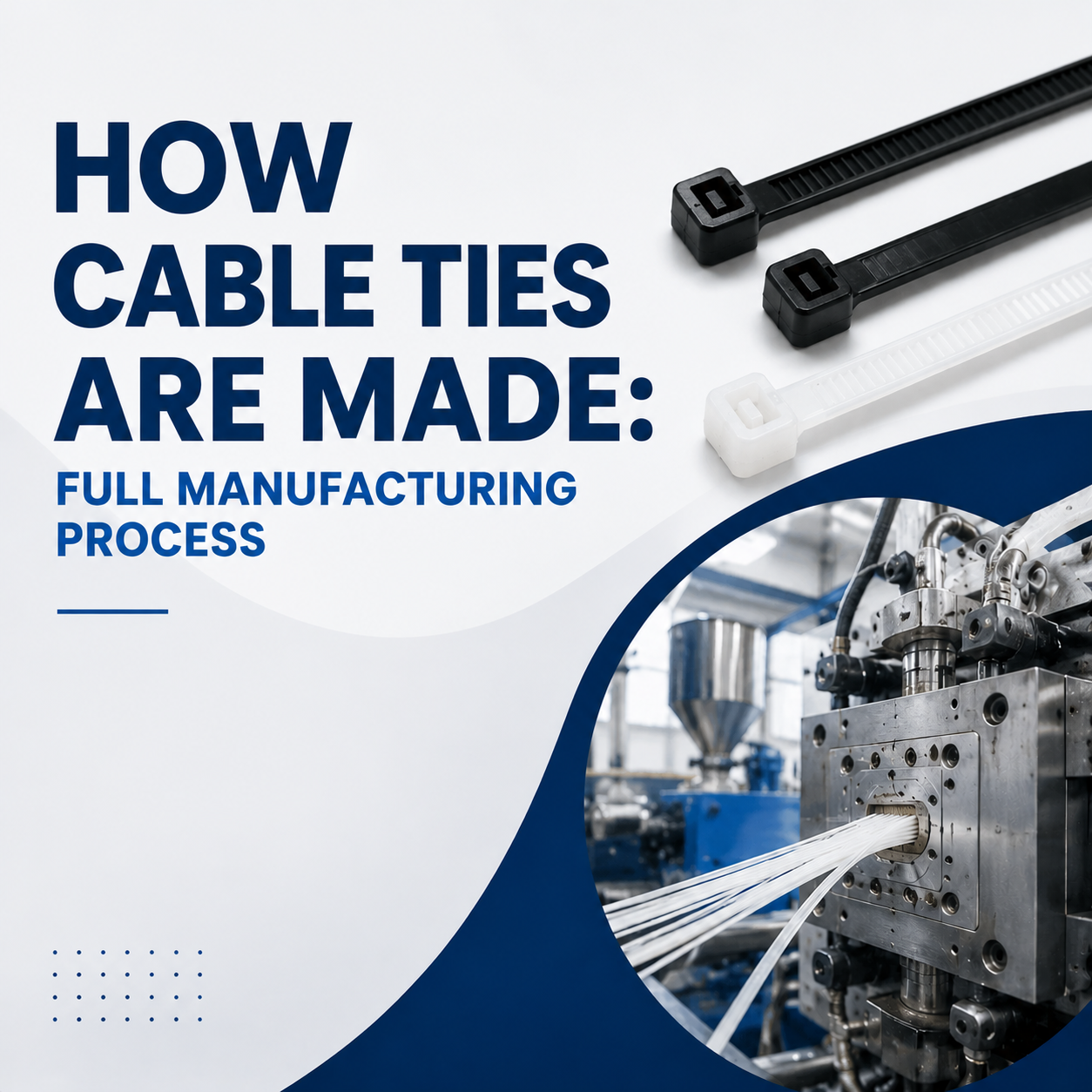
Before diving into technical material sheets, it helps to establish a clear baseline. To answer the most fundamental question—what are cable ties—you simply need to look at them as the universal muscles of modern commercial cable management.
At its heart, a cable tie is a high-strength, strip-style fastener engineered to loop around bundles of loose items, zip locked tight through an internal ratcheting gear head, and hold them securely forever.
Walk through any major commercial facility and you will spot these fasteners everywhere. Heavy manufacturing plants use them to pin heavy fluid hoses away from hot, moving engine parts. Marine shipyards rely on them to route main electrical grids through high-vibration engine rooms, and solar fields use them to lock down hundreds of miles of solar panel panels against heavy wind forces.
Depending on which country your suppliers or engineering teams operate in, you will encounter various regional terms on bulk bill-of-materials sheets. Wire ties, plastic wraps, and tie-wraps are all just another name for zip ties, and they all refer to the exact same basic mechanical fastening system.
The harshness of your operational environment dictates the exact material you need to source. To understand what are cable ties made of, you must evaluate the distinct operational thresholds of different chemical formulations.
Nylon Cable Ties: This is the absolute workhorse of global industry. Molded primarily from premium Nylon 66, nylon cable ties offer an exceptional balance of low weight, high flexibility, and fantastic chemical resistance against common oils and industrial greases. They are perfect for wrapping up data center wire bundles or general indoor electrical panels.
Metal Cable Ties: When your project transitions into extreme environments where plastics soften, crack, or catch fire, you must graduate to heavy-duty metal cable ties. These unyielding fasteners do not degrade under intense heat and provide permanent, structural holding power across heavy chemical processing zones.
Stainless Steel Cable Ties: Crafted from premium industrial grades like 304 or 316 marine-grade steel, pure stainless steel cable ties are completely immune to intense outdoor weathering, brutal acid washes, and prolonged rust exposure on offshore oil rigs.
SS PVC Coated Cable Ties: For highly specialized, high-vibration applications, bare metal edges can sometimes pose a threat to your installations. Specialized ss pvc coated cable ties feature a premium stainless steel core shielded by a smooth, protective polyvinyl chloride exterior cushion. This smart coating acts as a shock-absorbing buffer, ensuring the sharp metal edges never cut or chafe through delicate, live electrical insulation during constant machine vibrations.
Navigating the diverse commercial marketplace requires a clear breakdown of functional designs. Fasteners are categorized by how they lock and face external elements.
Standard Self-Locking Ties: These are the most common permanent fasteners. Once you thread the tail through the one-way ratcheting head, the lock is set permanently. The only way to remove it is by physically snipping the strap, making it perfect for fixed infrastructure.
Releasable and Reusable Ties: These variants feature an integrated trigger lever on the locking head. Pressing the lever with a thumb or small pocket tool lifts the internal pawl, letting you slide the tail backward cleanly to add or remove wires without generating plastic trash.
You can study the internal mechanics of how do releasable cable ties work to help your assembly teams save thousands of dollars in wasted materials during multi-stage wire routing updates.
Heavy-Duty Weatherproof Ties: Infused with specialized carbon black additives during the molding phase, these outdoor-ready plastic ties resist intense, long-term ultraviolet sunlight, preventing the polymer chains from turning brittle and snapping on outdoor solar racks.
Identification and Marker Ties: These specialized fasteners feature an integrated, flat plastic flag tab directly attached near the locking head. This blank space allows technicians to stamp, write, or print specific bar codes and circuit numbers directly onto the bundle for fast troubleshooting.
Engineering Blueprint: Material Profiles & Operational Thresholds
| Core Material Group | Temperature Resistance Range | Chemical & UV Resistance | Best Industrial Use Case |
| Standard Nylon 66 | -40°C to 85°C | Moderate | Indoor electrical enclosures, office IT server racks |
| UV-Stabilized Nylon | -40°C to 102°C | High UV / Moderate Chemical | Outdoor construction, commercial solar racking |
| Stainless Steel (304/316) | -80°C to 538°C | Extreme (Fireproof & Acidproof) | Offshore oil rigs, heavy chemical processing lines |
| PVC Coated Stainless Steel | -60°C to 150°C | Extreme UV / High Cushioning | High-vibration marine setups, shipyard cabling |
When specifying gear for an industrial build, safety margins are non-negotiable. Answering the critical question of how strong are cable ties requires looking at a metric known as loop tensile strength, which directly dictates how much weight each specific material type can support.
Understanding Cable Tie Tensile Strength: This value represents the maximum amount of direct, outward pulling force the locked loop can support before the locking teeth strip or the strap snaps completely. It is measured in pounds or Newtons under strict industrial pull testing.
Standard Nylon Cable Ties Strength: Standard miniature and intermediate nylon cable ties are engineered for light-duty wire management. They offer quick bundling power for indoor commercial electrical panels, IT server racks, and basic automotive wire routing where mechanical stress is minimal.

Heavy-Duty Weatherproof Ties Strength: Infused with carbon black, these thick, outdoor-ready plastic ties are tough enough to hang heavy industrial electrical conduits, anchor thick water lines, and secure large industrial hose wraps against heavy wind forces.
Stainless Steel Cable Ties Strength: Built for the most punishing structural demands, pure stainless steel cable ties handle immense mechanical loads. They provide unyielding structural holding power to secure massive utility power lines and anchor heavy pipes against high-pressure structural shifts.
SS PVC Coated Cable Ties Strength: While the premium stainless steel core maintains immense heavy-duty pulling strength, the addition of the protective polyvinyl chloride exterior cushion slightly reduces the maximum raw clearance of the locking gears, offering a perfect high-strength balance with added insulation protection for high-vibration shipyards.
While a standard plastic fastener is incredibly versatile, demanding industrial environments often require your business to look for specialized cable tie alternatives within the broader fastener family to handle extreme conditions. Navigating these professional upgrades ensures your infrastructure remains intact when standard options reach their physical limits.
Upgrading Nylon to Stainless Steel Cable Ties: When your routing paths run directly alongside high-temperature exhaust manifolds, steam lines, or harsh chemical washdown areas, standard nylon simply cannot survive the environmental stress. Swapping out plastics for pure stainless steel cable ties provides an unyielding, fireproof alternative that handles temperatures up to 538°C without losing an ounce of holding power.
Choosing SS PVC Coated Cable Ties Over Bare Metal: In heavy manufacturing plants prone to continuous machine vibrations—such as stamping stations or automotive assembly lines—bare metal edges running against live wiring grids present a subtle cutting hazard. Transitioning to ss pvc coated cable ties provides a smart, cushioned alternative; the smooth PVC exterior lining dampens continuous vibrations and shields delicate wire jackets from being cut by the inner steel core.
Swapping Standard Ties for Heavy-Duty Weatherproof Options: For outdoor infrastructure projects like commercial solar farms or roof-mounted HVAC systems, replacing standard interior nylon ties with carbon-black infused weatherproof variants is highly recommended. These outdoor-specific alternatives resist intense, long-term ultraviolet degradation.
To understand how long these specialized fasteners can survive under relentless sun exposure, you can read this comprehensive industry brief on the uv resistant cable ties lifespan guide to ensure your installations do not dry out, turn brittle, and snap over time.
What is another name for zip ties in professional engineering documents?
They are officially listed as cable ties, wire ties, or polymeric locking straps on commercial procurement sheets.
Which types of cable ties last the longest in direct, hot desert sunlight?
Pure stainless steel ties last a lifetime outdoors, while carbon-black infused UV-stabilized nylon ties offer excellent long-term plastic survival.
How strong are cable ties made of stainless steel compared to standard nylon?
Standard nylon ties max out around 120 pounds, whereas heavy industrial stainless steel variants easily exceed 350 to 500 pounds.
Why should my company buy ss pvc coated cable ties instead of bare metal ones?
The smooth PVC coating acts as a protective cushion, preventing raw steel edges from slicing through cable jackets under vibration.
What are cable ties used for in heavy automotive manufacturing?
They bundle wiring harnesses away from hot engines, anchor hydraulic brake lines, and organize high-temperature fluid overflow hoses safely.
Matching the correct material type and precise cable tie tensile strength to your specific job environment protects your infrastructure from unexpected physical breakdowns. Sourcing high-grade commercial fasteners optimizes your long-term operational efficiency. Contact the BOESE team today to receive direct factory-direct wholesale pricing on your bulk industrial fastener orders!

Modern enterprise integrating R&D, production, sales and service
Privacy Policy | Sitemap
Copyright BOESE Co.,Ltd SUPPORT BY :JUNJ
 Optimized by Seraphinite Accelerator