- WhatsApp: 8613777772066
- Email: [email protected]


Think of cable clips and wire clips as the unsung heroes of your workspace. They transform a dangerous “spaghetti” of wires into a clean, safe, and professional cable support system. Whether you’re running fiber for a small office or managing heavy-duty industrial lines, choosing the right clip keeps your business organized, prevents downtime, and ensures your installations are up to code for years to come.

In the world of electrical hardware, “one size fits all” is a myth that leads to loose wires and failed inspections. Picking the wrong clip can actually pinch your insulation, causing data interference or even short circuits. This is why many global distributors partner with a top cable clip manufacturer in China like BOESE. By choosing a factory with proven quality control, you ensure that every circle clip and steel clamp meets the rigorous safety standards your clients expect. Here is the professional lineup you’ll see in any serious cable support system:
Circle Cable Clips: The most common player. These are curved to wrap perfectly around round power cords, coax cables, or ethernet lines. When sourcing for your business, look for K-Type circle clips; their reinforced design is a lifesaver in high-traffic areas where cables might be bumped or pulled.
Flat Cable Clips: These are shaped like a small bridge with a flat top. They are specifically engineered for flat wires, like the twin-and-earth cables used in lighting and power circuits. They hold the wire flush against the wall, preventing the “bulging” look that ruins a professional finish.
Hook Cable Clips: These look like a little “J” or a hook. They are perfect for temporary setups or environments where you frequently add or remove wires. Instead of ripping the clip out, you just slide the wire in or out of the hook.
Single/Double Plastic Tube Clamps: When your project moves beyond thin wires and starts dealing with rigid pipes or conduits, these are essential. They snap around the pipe to keep it from vibrating, which is critical in hydraulic or pneumatic systems where movement equals wear and tear.
This is where many procurement managers get confused. While they both hold things in place, they have very different “personalities” and use cases.
The Cable Clip
A clip is usually a “one-and-done” solution. It’s small, lightweight, and often comes with a pre-installed hardened steel nail. It is designed for attaching cable to wall surfaces quickly. Clips are perfect for fixed installations where the wire isn’t expected to move.
The Cable Clamp
A cable clamp is the “heavy-duty cousin.” These usually involve a wrap-around design and are secured with a screw or a bolt. They are much stronger and are built for heavy duty cable clips applications. If your cable is thick, heavy, under tension, or attached to a machine that vibrates 24/7, you need a clamp. Clamps allow for a much higher “pull-out” force, ensuring the cable stays put even under mechanical stress.
At a Glance: Cable Clip vs. Cable Clamp Comparison
| Feature | Cable Clip (Nail-in Style) | Cable Clamp (Heavy Duty) |
| Fixing Method | Hardened Steel Nail | Screw, Bolt, or Nut |
| Best Application | Lightweight wires (Ethernet, Coax) | Heavy cables, pipes, and conduits |
| Surface Suitability | Wood, Drywall, Soft Masonry | Metal, Concrete, Industrial Machinery |
| Load Capacity | Low to Medium | High (Tension & Vibration resistant) |
| Fire Safety | Primarily Plastic (PE/Nylon) | Available in Fire Resistant Steel |
| Reusability | Generally permanent/Single use | Removable and adjustable |
| Durability | Standard indoor/outdoor use | Heavy duty; resistant to mechanical wear |
Why bother with clips at all? It’s tempting to just tuck wires behind a desk or throw them over a ceiling tile, but for a real business environment, that’s a recipe for disaster.
Safety and Tripping Hazards: A loose wire on a floor or dangling from a ceiling isn’t just an eyesore—it’s a major liability. Electrical cable clips pin those risks safely out of reach, protecting your staff and your business from accidents.
Protecting Signal Integrity: In data centers or server rooms, gravity is the enemy. If a heavy bundle of cables hangs unsupported, the internal copper or fiber can stretch and degrade over time. Clips provide the necessary support to keep your high-speed data flowing without interruption.
Effective Heat Management: When wires are bunched together in a messy pile, they trap heat. Spacing them out neatly with heavy duty cable clips allows air to circulate around each line. This prevents overheating, which is a common cause of electrical fires in industrial settings.
Installing these things seems simple, but there is a “right” way that separates a pro job from an amateur mess. Installing cable clamps correctly requires understanding your surface.
Masonry and Brick: You can’t just hammer a nail into a brick. You’ll either bend the nail or crack the brick. For these surfaces, you often need to drill a small pilot hole or use clips with specialized masonry nails.
Wood and Drywall: These are easier, but be careful with drywall. If you hammer too hard, the vibration can cause the plaster to crack around the clip.
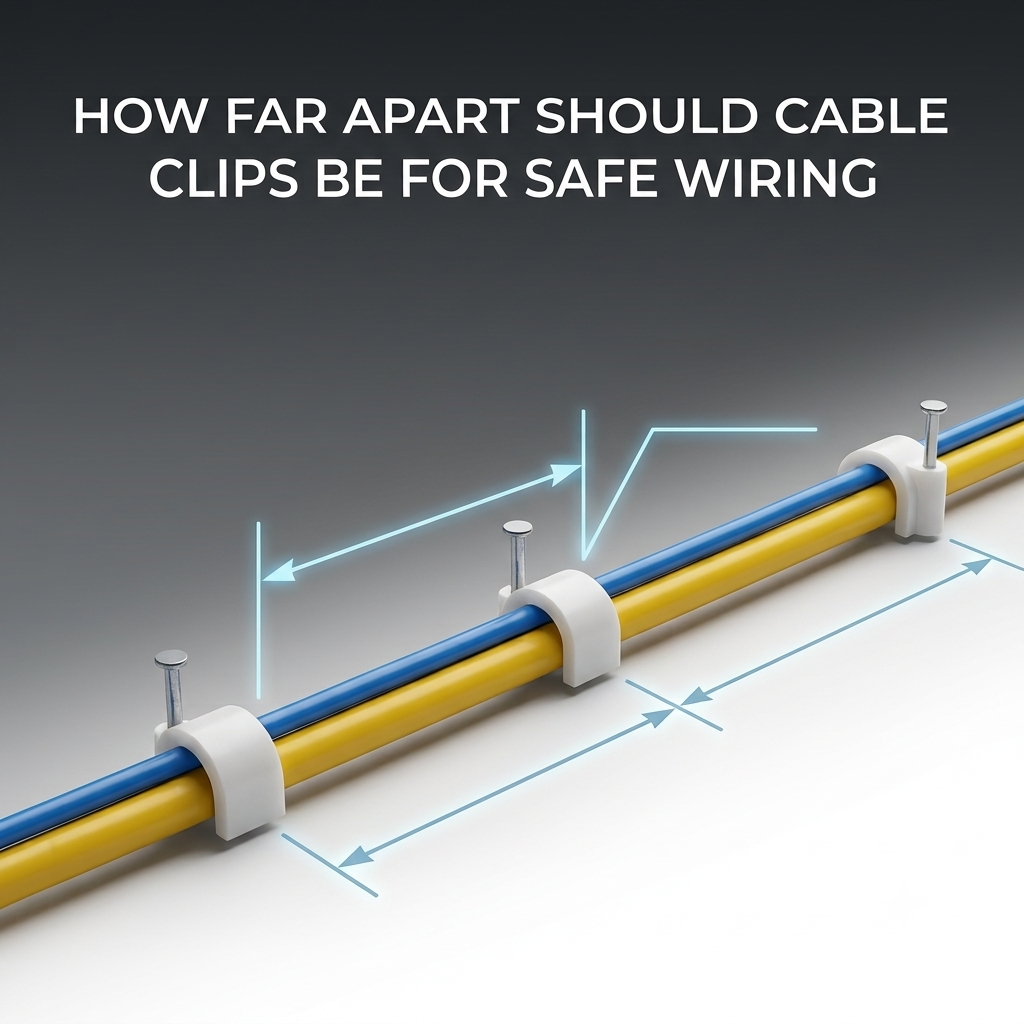
The Spacing Secret: For a professional, sag-free look, place a clip every 25 to 30 centimeters. For heavier cables, reduce that distance to 20cm. If you go too far, the wire will sag like an old laundry line, which looks sloppy and puts stress on the connections.
Straightening the Wire: Always pull the wire slightly taut as you go. A “wavy” wire is the mark of a rushed job.
Ready to get to work? Follow this guide for proper installation of cable clamps and clips to ensure they stay put for the long haul.
Map Your Route: Before you drive the first nail, walk the path of the cable. Avoid running wires near heat sources or sharp metal edges that could chafe the insulation.
Seat the Cable: Slide the circle cable clips or flat clips over the wire. Make sure the wire is seated deep in the “U” or “C” shape of the clip. If it’s loose, you have the wrong size.
The “Starter Tap”: Don’t try to drive the nail in with one giant swing. Start with a few light, precise taps to get the nail standing up on its own in the wall.
Drive it Straight: Once the nail is steady, give it a firm, straight strike. Stop the moment the plastic of the clip touches the wall surface. If you keep hammering, you’ll “over-drive” it, which cracks the plastic and weakens the hold.
The Pull Test: Give the wire a gentle tug. If the clip wiggles or pops out, the nail didn’t find a solid grip. This is your chance to fix it before the whole line sags. This simple step is the core of how to install cable clamps correctly.
How do I know if I need a flat or circle cable clip?
Check your wire’s cross-section. Round wires need circle cable clips; flat wires (like twin-and-earth) need flat clips for a flush fit.
What happens if I use a clip that is too big for the wire?
The wire will slide around, causing friction and eventual sagging. Proper installation of cable clamps requires a snug, non-slip grip.
Can I use plastic clips for fire-rated zones?
Generally, no. Most building codes now require fire resistant cable clips made of metal in public areas and escape routes.
Do I need a drill for all cable clamps?
Nail-in clips are tool-free (just a hammer), but heavy duty cable clips and tube clamps usually require a screw and a pilot hole.
Mastering your cable support system is about more than just aesthetics—it’s about building a safer, more efficient business environment. From simple circle cable clips for the office to fire resistant cable clips that save lives in an emergency, the right hardware is the foundation of quality work. Ready to secure your next project with professional-grade gear? Contact BOESE for a quote today!


Modern enterprise integrating R&D, production, sales and service
Privacy Policy | Sitemap
Copyright BOESE Co.,Ltd SUPPORT BY :JUNJ
 Optimized by Seraphinite Accelerator