- WhatsApp: 8613777772066
- Email: [email protected]


Every time you reach for a cable tie to bundle wiring, secure a harness, or organize a control panel, you’re relying on a small part with a surprisingly precise manufacturing process behind it. If you’re sourcing cable ties for your business, understanding how cable ties are made can help you evaluate suppliers, specify the right material, and avoid quality issues down the line. In this guide, you’ll walk through the full cable tie manufacturing process, from raw material selection to the finished tie that ends up in your toolbox or on your production line.
Before you can understand cable tie production, it helps to know what are zip ties made of in the first place. Most cable ties you’ll find on the market are made from nylon 66 (polyamide 66), a high-performance thermoplastic chosen for its strength, flexibility, and resistance to heat and chemicals. For applications that demand higher temperature tolerance or added security, metal cable ties made from stainless steel are the alternative. Your choice of cable ties material directly affects tensile strength, UV resistance, and how the tie performs in your specific environment.
| Material | Key Properties | Best For | Typical Standard |
|---|---|---|---|
| Nylon 66 (PA66) | High tensile strength, flexible, good chemical resistance | General indoor/outdoor wiring bundling | UL 62275 |
| Nylon 66 UL-Rated | Flame-retardant additive, self-extinguishing | Electrical panels, appliances, regulated industries | UL94 V-2 |
| Stainless Steel (Metal Cable Tie) | High temperature and chemical resistance, tamper-resistant | Outdoor, marine, high-heat industrial settings | ASTM A240 / A666 |
| Heat-Stabilized Nylon | Extended UV and thermal aging resistance | Long-term outdoor installations | UL 62275 |
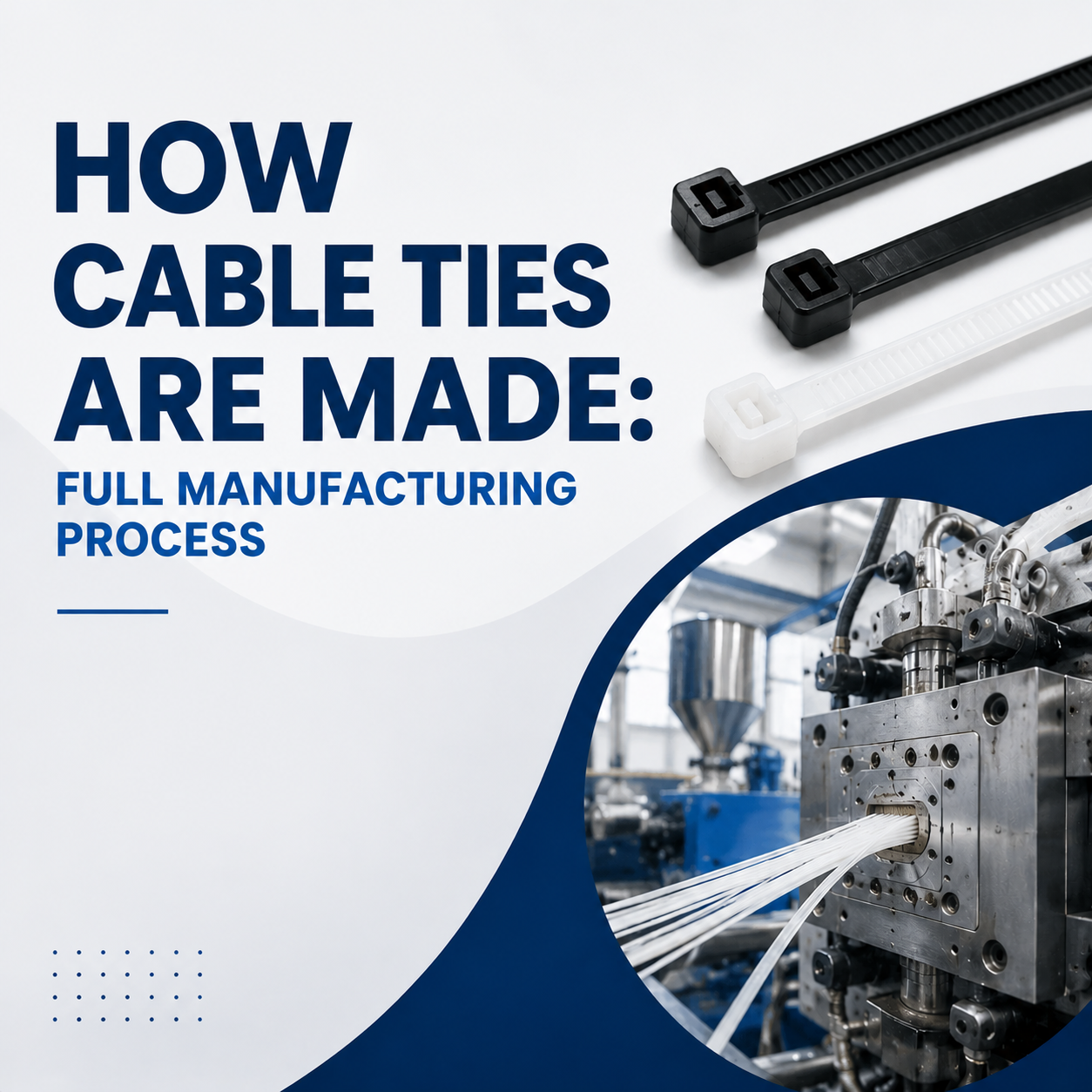
Once your supplier has selected the right resin or metal strip, cable tie production moves through several tightly controlled stages. Here’s what typically happens on the factory floor:
Because nylon cable ties make up the majority of global demand, a dedicated nylon cable tie factory typically runs multiple high-speed injection molding lines in parallel, each capable of producing thousands of ties per shift. Precision molds are critical here — even small tolerances in tooth spacing or strap thickness can affect how reliably a tie locks and holds under load. If your business needs UL-rated products, look for a nylon 66 cable tie manufactured with certified flame-retardant compounds and tested to UL94 V-2. You can compare established suppliers in this roundup of top nylon cable tie manufacturers, or explore BOESE’s own range of nylon cable ties built for industrial and commercial use.

Metal cable tie production follows a very different path from nylon. Rather than injection molding, manufacturers start with coiled stainless steel strip, which is precision-stamped to create the ladder-style locking teeth, then rolled and formed into a self-locking loop. Because metal ties don’t rely on plastic ratchet teeth, they hold up better in high-heat, high-vibration, or corrosive environments where nylon may degrade over time.
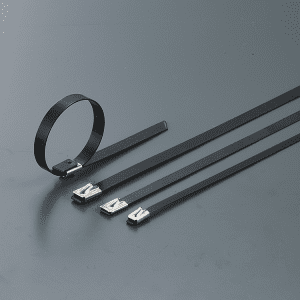
If you’re unsure which option fits your project, this comparison of metal cable tie vs plastic cable tie options breaks down the key differences so you can match the right tie to your application.
Not every cable tie coming off a production line meets the same bar. When you’re vetting a supplier, ask about certifications like UL 62275 for general performance, and confirm whether their nylon 66 UL rating applies to the specific product line you’re ordering — UL listings can vary by tie size, color, and lot. Reputable manufacturers also test batches for tensile strength and thermal performance before shipping. If your ties will be exposed to high temperatures, it’s worth reviewing everything you need to know about cable tie heat resistance before finalizing your order.

Understanding how cable ties are made gives you a real advantage when you’re negotiating with suppliers or troubleshooting a quality issue. Whether your business needs bulk nylon cable ties for general wiring, UL-rated ties for regulated equipment, or metal cable ties for harsh outdoor conditions, working with a manufacturer that controls its own cable tie production — from resin compounding to final testing — gives you more consistency and better traceability than buying through a middleman.
Request a Free Cable Tie Quote
Cable ties are made by heating nylon 66 resin (or forming stainless steel strip) and shaping it in a mold or stamping press to create the strap, head, and locking teeth, followed by cooling, quality testing, and packaging.
Most cable ties are made of nylon 66, a durable thermoplastic. Heavy-duty or high-heat applications often use stainless steel metal cable ties instead.
Nylon 66 is a polyamide plastic known for its high tensile strength, flexibility, and resistance to chemicals and abrasion, making it ideal for holding wiring bundles securely under stress.
It means the nylon 66 material has been tested and certified by UL to meet flammability and performance standards such as UL94 V-2, which is often required for electrical and appliance applications.
Metal cable ties are stamped and rolled from stainless steel strip rather than injection molded, giving them a self-locking mechanism suited to high-temperature and high-vibration environments.
Manufacturers typically test tensile strength, loop tensile strength, temperature resistance, and UV stability to confirm each batch meets specification before shipping.
Yes. Reputable manufacturers can customize length, width, color, tensile strength, and UL certification requirements based on your project’s needs.
Minimum order quantities vary by manufacturer and customization level, so it’s best to confirm directly with your supplier based on your required specifications.
Base your choice on the application environment — nylon suits most general wiring needs, while metal cable ties are better for extreme heat, chemical exposure, or tamper-resistant requirements.
Standard stock items often ship quickly, while custom cable tie manufacturing runs typically require additional lead time for tooling, testing, and quality approval — ask your supplier for an exact timeline.
Ready to source cable ties built to your exact specifications? Get in touch with BOESE to discuss your project.

Modern enterprise integrating R&D, production, sales and service
Privacy Policy | Sitemap
Copyright BOESE Co.,Ltd SUPPORT BY :JUNJ
 Optimized by Seraphinite Accelerator