- WhatsApp: 8613777772066
- Email: [email protected]


Managing high-stress tactical situations requires reliable, rapid-response gear that never fails under pressure. While traditional heavy steel restraints remain a standard tool, modern tactical teams heavily rely on high-tensile handcuff zip ties for mass-control scenarios. This comprehensive guide covers how these lightweight systems improve field security, protect officer health, and optimize tight departmental budgets.
If you look inside a modern tactical vest or a patrol car utility bag, you will see rows of thick, specialized polymer bands. A professional handcuff zip ties unit is not a single strip of plastic, but a purpose-built temporary restraint system featuring a unique double-loop design.
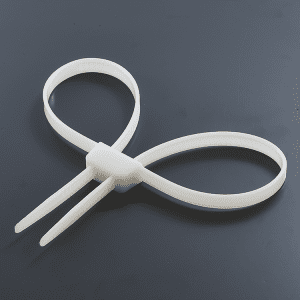
Instead of one opening, these tactical fasteners possess two separate, identical loops branching out from a central locking block. This layout allows an officer to isolate and secure each of a suspect’s wrists independently.
The inner tracks are lined with heavy, deep ridges that pass through heavy-duty ratchet gears inside the central housing. Once the strap tails are pulled through, they slide in one direction only. They lock down instantly, ensuring that a combative detainee cannot loosen the hold, wiggle out, or twist their hands to bypass the restraint while in transit.
It is a common misconception among civilians that law enforcement agencies just buy oversized garage fasteners to restrain suspects. In reality, deploying basic workshop items on human wrists creates a massive safety and legal liability.
The Dual-Ring Safety Geometry: Standard industrial ties force both wrists into a single tight circle, crushing the bones together and causing severe chafing. Specialized cable tie handcuffs utilize two independent loops that keep the wrists separated, protecting the detainee from nerve damage while maintaining maximum physical control.
Overbuilt Material Thickness: Everyday hardware straps are thin and narrow, meaning they can easily slice into human skin like a knife under tension. If you want to see how these compare to regular commercial fasteners, exploring a professional range of heavy-duty nylon cable ties highlights the clear engineering gap between everyday bundle straps and life-safety gear.
Tamper-Proof Locking Chambers: A standard home zip tie can be easily picked open in seconds using a safety pin, a paperclip, or a fingernail. Professional police zip tie handcuffs feature deeply recessed, heavy-duty internal locking teeth covered by protective plastic shrouds, making them completely impossible to pick or undo without a specialized cutting tool.
Brutal Pull Tensile Strength: Standard shop ties snap under a hundred pounds of pressure. Tactical variants are blended with elite, impact-modified nylon resins that can easily withstand over 250 to 300 pounds of raw, explosive pulling force from a struggling suspect.
Tactical & Operational Comparison: Handcuff Zip Ties vs. Traditional Iron Handcuffs
| Evaluation Metric | Professional Handcuff Zip Ties | Traditional Iron Handcuffs |
| Material Composition | High-tensile, impact-modified Nylon 66 | Chromium-plated carbon steel or heavy iron |
| Physical Weight (Per Unit) | Ultra-lightweight (Approx. 1.2 to 1.5 ounces) | Heavy industrial gear (Approx. 9 to 11 ounces) |
| On-Person Carrying Capacity | 15 to 20+ pairs easily managed in utility pockets | Maximum 1 or 2 pairs on a standard duty belt |
| Locking System Security | Permanent, recessed internal tooth (Zero pick risk) | Keyed cylinder lock (Susceptible to picking tools) |
| Sanitation & Hygiene | 100% Disposable. Zero cross-contamination risk | Requires thorough chemical bleaching after every use |
| Mass-Arrest Deployment | Elite speed. Single pull to secure both wrists safely | Slow. Requires fumbling with bails, teeth, and keys |
| Risk of Weapon Retention | None. No mechanical key exists for suspects to steal | High risk if an officer drops the universal cuff key |
| Unit Cost & Budget Impact | Extremely cost-effective for high-volume sweeps | High capital expenditure per unit if lost or stolen |
During chaotic crowd-control operations, large-scale public protests, or fast-moving tactical raids, field efficiency becomes a matter of life and death for your team.
Lightweight Bulk Carry: A single pair of traditional chromium steel handcuffs weighs around ten ounces. An officer can realistically carry only one or two pairs on a standard duty belt before the weight drags them down. By contrast, an officer can slide twenty lightweight law enforcement zip ties into a cargo pocket or zip them onto a tactical vest without adding noticeable weight.
Rapid-Fire Threat Neutralization: In a chaotic environment, you cannot waste valuable seconds fumbling with keyholes, adjusting moving metal bails, or locking a mechanical hinge. With high-tensile police zip ties, you simply slip the pre-formed loops over the suspect’s hands and pull the tails. The system clicks shut in a split second, letting you immediately move on to secure the next threat.
Simplified Multi-Agency Logistics: When local police departments, state troopers, and federal teams coordinate on a massive operation, keeping track of proprietary handcuff keys is an absolute nightmare. Using uniform, disposable plastic restraints ensures every officer on the scene can instantly manage, control, and transfer detainees between transport vehicles without key-matching delays.
Modern policing exposes field teams to an array of biological hazards. Protecting your staff from invisible health threats during booking and transport is a top operational priority.
Eliminating Bloodborne Pathogen Risks: Combative suspects often suffer from open cuts, scratches, or transmissible skin conditions. Traditional metal cuffs possess deep cracks, hinge pins, and keyway holes that easily trap bodily fluids, blood, and bacteria. Cleaning them thoroughly in the field with harsh chemical wipes is time-consuming and often incomplete.
The Single-Use Sanitary Shield: Deploying police zip tie handcuffs completely eliminates the cross-contamination cycle. Once a suspect is securely delivered to a holding facility, a guard simply uses a shielded safety cutter to snip the plastic loops off. The used tie goes straight into a biohazard trash bin, ensuring zero secondary infections reach your staff or future detainees.
Preventing Weapon Retention Battles: One of the most dangerous moments in a physical struggle occurs when a suspect attempts to reach for an officer’s equipment belt. If an officer drops a traditional handcuff key during a scuffle, that key becomes a tool for escape. Because disposable zip tie hand cuffs utilize a permanent, tool-free lock, there is no key for a suspect to steal, manipulate, or use as a makeshift weapon.
Managing a security agency or a major public safety department requires balancing strict operational safety with a realistic eye on tax or corporate budgets.
Metal handcuffs are expensive pieces of machined hardware. They frequently get lost during chaotic multi-agency sweeps, get left behind in transport vans, or walk out the door with transferring detainees. Shifting your baseline mass-restraint protocol to bulk law enforcement zip ties stops your high-cost equipment from vanishing in the field.
Metal restraints require constant upkeep. They must be regularly oiled to prevent rust, checked for bent bails, and inventoried to match specific keys. Plastic tactical ties require absolutely zero maintenance—they sit perfectly clean and ready to use inside storage crates for years without losing their structural strength.
Purchasing cable tie handcuffs in high-volume master cartons allows logistics managers to maximize their purchasing power. Bulk ordering ensures that supply depots, training academies, and emergency response vehicles remain fully stocked throughout the fiscal year at a fraction of the cost of hardware gear.

Even the toughest tactical gear can fail or cause unnecessary liability if your team applies it incorrectly during a stressful encounter. Keep these three critical field warnings in mind.
Because high-tensile police zip ties slide closed so easily, a highly stressed officer might yank the strap tails with excessive force. Cinching the polymer bands too tight can restrict blood circulation or compress the ulnar nerves, leading to lasting wrist numbness. To review proper field deployment techniques, check out this operational brief on how to use zip tie handcuffs step-by-step to keep your team safe and legally compliant.
When it is time to remove zip tie hand cuffs, never rush in with standard industrial wire cutters, side snips, or a pocket knife. A suspect who jumps or moves suddenly while a sharp blade or pointed snip is pressed against their wrist can suffer deep skin lacerations. Always use specialized, blunt-tipped safety cutters that slide flat along the skin to shield the detainee from accidental cuts.
Nylon 66 is an exceptionally strong material, but leaving your tactical gear unprotected on a patrol car dashboard under direct, blazing sunlight will take a heavy toll. Over months of exposure, intense ultraviolet rays dry out the plastic, making it brittle. Always store your bulk handcuff zip ties inside dark utility bags, glove compartments, or trunk organizers so they retain their full strength when you need them.
Are zip tie handcuffs illegal for regular citizens to buy?
They are legal to purchase, but using them to restrain someone without explicit legal authority constitutes unlawful imprisonment.
Can a suspect break out of professional cable tie handcuffs?
No. High-tensile tactical variants require over 250 pounds of direct force and must be cut off with tools.
Can you reuse a police zip tie handcuff after cutting it?
No. These tactical fasteners are strictly single-use safety items designed to be destroyed and discarded after deployment.
Why are most law enforcement zip ties colored bright yellow or black?
Bright yellow allows guards to check security at a glance, while matte black is used for stealth tactical operations.
Do police zip ties cause more wrist injuries than metal cuffs?
No. When installed with proper spacing, the wide plastic bands distribute load evenly, preventing deep metal skin cuts.
Transitioning to premium handcuff zip ties protects your officers from biohazard exposure, slashes material loss, and gives your field team an ultra-lightweight crowd-control solution. Equipping your agency with proper tactical tools ensures seamless security during high-volume operations. Contact the BOESE team today to get factory-direct commercial pricing on your next bulk order!

Modern enterprise integrating R&D, production, sales and service
Privacy Policy | Sitemap
Copyright BOESE Co.,Ltd SUPPORT BY :JUNJ
 Optimized by Seraphinite Accelerator