- WhatsApp: 8613777772066
- Email: [email protected]


You often face challenges when managing wiring in vehicles. Choosing the right cable ties ensures reliability, safety, and durability. Using Car Cable Ties can simplify automotive wire management, especially in high-temperature or vibration-prone areas. Understanding their advantages helps you avoid failures and maintain clean installations.
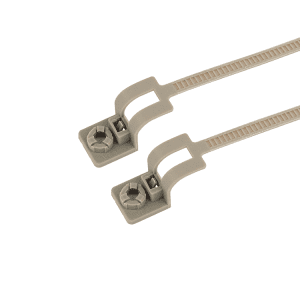
Automotive Stud Cable Ties
Car Cable Ties are specially designed for automotive environments. They feature higher temperature resistance, enhanced durability, and UV stability for engine compartment and under-hood wiring.
Standard cable ties are general-purpose ties suitable for household, office, or light industrial use. They often lack heat resistance and mechanical strength required for vehicles.
Automotive cable ties differ in tensile strength, material grade, and design features, which make them more suitable for long-term vehicle applications compared to standard cable ties.
Wires in cars are exposed to engine heat, road vibrations, and fluctuating temperatures. Proper cable tie selection prevents loosening, damage, and failures.
Organizing wires efficiently in tight engine spaces is crucial. Using Car Cable Ties ensures stable routing without compromising performance.
Automotive wiring must meet safety standards, avoid short circuits, and prevent damage from friction or heat. The right cable tie contributes to these requirements.
Car cable ties use high-grade nylon or specialized polymers, offering superior tensile strength and environmental resistance than standard ties.
Standard ties may deform or melt in high-heat zones, whereas automotive cable ties maintain performance even in engine compartments.
Automotive cable ties resist UV exposure, vibration, and oil contact, ensuring longevity for critical wiring systems.
In engine bays or near heat-generating components, Car Cable Ties outperform standard ties, avoiding premature failure.
For permanent wiring in vehicles, automotive cable ties provide lasting security, reducing maintenance and replacement needs.
For safety-critical circuits, using automotive cable ties minimizes risks of wire damage or disconnections.
Standard cable ties lack the mechanical strength, heat tolerance, and durability for automotive environments. Using them in vehicles can lead to failures and safety issues.
Consider temperature ratings, tensile strength, and UV resistance when choosing ties for engine areas.
Choose appropriate sizes and grades for cable bundles, securing both electrical and mechanical integrity with Car Cable Ties.
Selecting Car Cable Ties over standard ties improves reliability, durability, and safety in automotive wiring. For professional-grade products and solutions, trust boese to meet your automotive cable management needs.
What makes car cable ties better than standard ones?
They offer higher heat resistance, better durability, and stronger tensile strength for automotive environments.
Can standard cable ties be used in vehicles?
They can, but they risk failing under high heat or vibration, making car cable ties more reliable.
Where should you use automotive cable ties?
Engine compartments, under-hood wiring, high-temperature or vibration-prone areas.
Do car cable ties last longer than standard cable ties?
High-grade materials and design make them more resistant to environmental stress.
How do you choose the right car cable tie for a specific application?
Consider bundle size, temperature exposure, material grade, and mechanical requirements.


Modern enterprise integrating R&D, production, sales and service
Privacy Policy | Sitemap
Copyright BOESE Co.,Ltd SUPPORT BY :JUNJ
 Optimized by Seraphinite Accelerator