- WhatsApp: 8613777772066
- Email: [email protected]


If you’ve ever ordered cable ties for your business and received the wrong length or watched a bundle snap under load, you already know that cable tie sizes aren’t a “one size fits all” decision. Whether you’re managing electrical installations, industrial wiring, or large-scale manufacturing, choosing the correct cable tie dimensions protects your equipment, your safety compliance, and your bottom line.
In this guide, you’ll learn how to read a standard cable tie sizes chart, how cable tie length and cable tie width affect performance, and how to match the right tie — from 4 inch cable ties to 12 inch cable ties — to your business application. By the end, you’ll be able to specify cable ties with confidence for your next project or bulk order.

Before you place your next order, it helps to understand exactly what “size” means when you’re comparing cable ties. Every cable tie is defined by two core measurements:
When you’re specifying ties for your business, always check both dimensions together. A longer tie with a narrow width may wrap around a large bundle, but it won’t necessarily hold that bundle securely under stress. That’s why understanding cable tie tensile strength alongside dimensions is essential for any procurement decision.
Use the table below as a quick reference when you’re specifying ties for your next project. These are the most common standard cable tie sizes used across electrical, industrial, and general-purpose applications.
| Length | Width | Max Bundle Diameter | Tensile Strength | Typical Use Case |
|---|---|---|---|---|
| 4 in (100 mm) | 0.1 in (2.5 mm) | ~1 in (25 mm) | 18 lbs | Light bundling, small wire harnesses |
| 6 in (150 mm) | 0.14 in (3.6 mm) | ~1.5 in (38 mm) | 40 lbs | General electrical wiring |
| 8 in (200 mm) | 0.19 in (4.8 mm) | ~2 in (50 mm) | 50 lbs | Medium wire and cable bundles |
| 11 in (280 mm) | 0.3 in (7.6 mm) | ~3 in (75 mm) | 120 lbs | Industrial cable runs |
| 12 in (300 mm) | 0.3 in (7.6 mm) | ~3.5 in (89 mm) | 120 lbs | Heavy wiring, outdoor installations |
| 18 in (450 mm) | 0.35 in (9 mm) | ~5 in (127 mm) | 175 lbs | Large bundles, heavy duty applications |
Note: dimensions may vary slightly by manufacturer. Always confirm exact specifications with your supplier before placing a bulk order for your business.
To choose the correct cable tie length, measure the diameter of the bundle you need to secure, then multiply it by pi (approximately 3.14) to estimate the circumference. Add roughly 20% extra length to allow the tie to pass comfortably through the locking head. This simple formula helps you avoid ordering ties that are too short to close properly or so long that you waste material — and budget — on every bundle your team secures.
If your business regularly handles varying bundle sizes, it’s worth stocking two or three lengths rather than a single size. This flexibility keeps your technicians from improvising with oversized ties, which is one of the most common causes of loose, unsafe cable management on job sites.
Cable tie width is the factor most often overlooked in procurement — yet it’s the single biggest driver of tensile strength. A wider strap distributes load across more material, which is why 0.3-inch ties can hold well over 100 lbs while 0.1-inch ties are rated for a fraction of that.
When you’re sourcing ties for your business, match the width to the actual mechanical stress the bundle will experience — not just its diameter. A thick bundle of lightweight signal cables may only need a narrow tie, while a thinner bundle of heavy-gauge power cables running through a vibration-prone environment may require a much wider, higher-strength strap. Getting this wrong can lead to tie failure, cable damage, or costly downtime for your operation.
These three lengths cover the majority of everyday business use cases:
If you’re unsure which length to standardize on, 8-inch ties are usually the safest default for mixed industrial or commercial use, with 4-inch and 12-inch ties kept on hand for the smaller and larger jobs that come up.
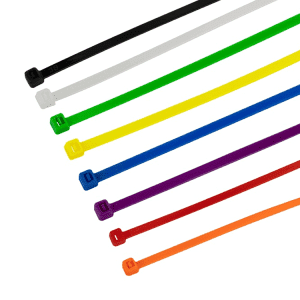
Standard nylon ties work well for most indoor, low-stress applications, but your business may face conditions that call for a heavy duty cable tie instead — think outdoor exposure, UV radiation, chemical contact, vibration, or bundles that carry significant weight. Heavy duty ties are typically wider, thicker, and rated for higher tensile strength, often exceeding 175 lbs.
Before you scale up an order, it’s worth reviewing how nylon material and manufacturing quality affect long-term performance. You can compare sourcing options in this overview of leading nylon cable tie manufacturers, which breaks down what separates reliable suppliers from the rest.
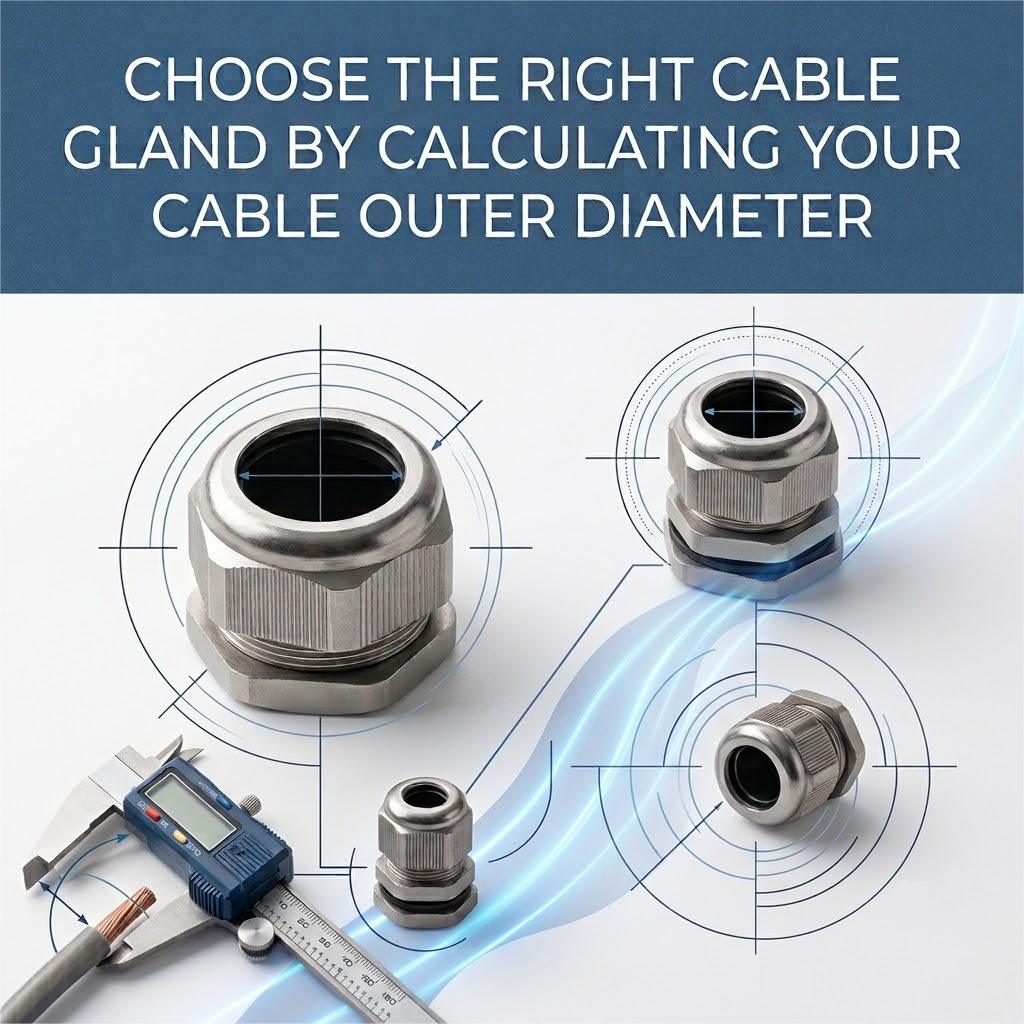
Cable ties aren’t the only sizing decision your business will face when managing cable runs. If your project also involves sealing cables through enclosures or panels, you’ll want to reference a cable gland size chart to make sure your gland and cable tie selections work together as a complete, compliant system.
At BOESE, you get more than a catalog of sizes — you get consistent quality control, and bulk pricing built for B2B procurement. Whether your business needs 4 inch cable ties for delicate assemblies or heavy duty 18-inch ties for outdoor infrastructure, BOESE manufactures to precise specifications so every batch performs the way your project requires.
Explore BOESE Cable Ties for Your Business
1. What are the standard cable tie sizes?
Standard cable tie sizes typically range from 4 inches to 18 inches in length, with widths between 0.1 inch and 0.35 inch. Most businesses standardize on 4-inch, 8-inch, and 12-inch ties to cover the majority of applications.
2. How do I measure cable tie length correctly?
Measure your bundle’s diameter, multiply it by 3.14 to get the circumference, then add about 20% extra to account for the locking head. This gives you the minimum cable tie length your project needs.
3. What size cable tie do I need for a 1-inch bundle?
For a 1-inch diameter bundle, a 4-inch cable tie is generally sufficient, since it accommodates bundles up to approximately 1 inch in diameter with room to spare.
4. What’s the difference between cable tie length and width?
Length determines how large a bundle the tie can wrap around, while width determines how much tensile strength and load capacity the tie provides. You need both dimensions to select the right product for your business.
5. Are 4 inch cable ties strong enough for light-duty use?
Yes. 4 inch cable ties are designed for light-duty bundling, such as small wire harnesses or PCB assemblies, and typically hold up to 18 lbs of tensile load.
6. When should your business use 8 inch cable ties?
8 inch cable ties are ideal for general electrical panels, IT and server room cabling, and standard wiring bundles that need moderate holding strength around 50 lbs.
7. What projects require 12 inch cable ties?
12 inch cable ties suit larger bundles, outdoor installations, and heavier wiring runs where your business needs extra length and around 120 lbs of tensile strength.
8. What does tensile strength mean for cable ties?
Tensile strength refers to the maximum pulling force a cable tie can withstand before it breaks. Choosing the right tensile strength ensures your bundles stay secure under real-world stress and vibration.
9. What is considered a heavy duty cable tie?
A heavy duty cable tie is typically wider and thicker than standard ties, with tensile strength ratings often above 175 lbs. These are built for outdoor, industrial, or high-load environments.
10. How do you choose between standard and heavy duty cable ties for industrial applications?
Consider the bundle weight, exposure to UV or chemicals, vibration levels, and regulatory requirements. If your project involves any of these factors, a heavy duty cable tie is the safer choice for your business.
Getting cable tie sizes right isn’t just a small procurement detail — it directly affects the safety, durability, and professionalism of your business’s electrical and industrial installations. By matching length, width, and tensile strength to your actual application, you protect your projects from premature failures and unnecessary reordering.

Modern enterprise integrating R&D, production, sales and service
Privacy Policy | Sitemap
Copyright BOESE Co.,Ltd SUPPORT BY :JUNJ
 Optimized by Seraphinite Accelerator