- WhatsApp: 8613777772066
- Email: [email protected]


When plastic fasteners fail under extreme heat or heavy loads, your infrastructure faces immediate risks. For your business, switching to rugged metal cable ties provides an indestructible solution to secure heavy wiring. This practical guide covers everything you need to know about selecting, installing, and tightening stainless steel cable ties to maintain a safe, long-lasting setup.
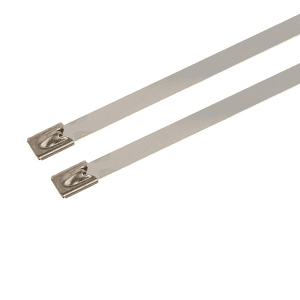
If you are dealing with harsh industrial environments, regular plastic ties simply will not cut it. They crack in the cold, stretch in the heat, and degrade under sunlight. That is where heavy-duty metal fasteners step in to handle the heavy lifting.
Standard stainless steel cable ties are the ultimate problem solvers for high-stress anchoring jobs. Instead of relying on a flexible plastic teeth system, they are constructed from high-grade alloys like 304 or 316 steel.
The Ball-Lock Mechanism: The magic happens inside the small hood at the top of the tie. A tiny, smooth metal ball rests inside a sloped chamber. As you slide the metallic strap through the head, the ball rolls freely, allowing the tie to smoothly glide forward.
The Unyielding Grip: The moment you pull the tie taut and let go, gravity and tension force that tiny ball back down the slope. It wedges itself tightly against the strap, biting down harder as more backward force is applied.
Built for the Elements: These fasteners do not care about burning flames, freezing weather, deep ocean salt, or intense chemical washdowns. They hold their shape and tension without flinching, keeping your cables pinned down for decades.
Most steel fasteners are designed to be permanent. Once you lock them and snip the tail, they are on for good until you destroy them with a pair of heavy wire cutters. However, certain projects require a more flexible approach.
The Release Tab System: Unlike the smooth, permanent ball-lock variants, reusable metal cable ties feature a special built-in buckle or a bendable ear system.
Adjustable Security: If you need to add another wire to a bundle next month, or if you are setting up a temporary structure for an industrial expo, you simply push back the metal locking tab with a flathead screwdriver or your thumb.
Saving Material Costs: These reusable options give you the raw, unbending strength of metal but prevent you from throwing money away on single-use items during prototyping or routine maintenance checks.
Getting these metal bands around your wire bundles is a straightforward process, but it requires a slightly different touch than your everyday plastic zip ties.
Gather the Right Bundles: Line up your cables neatly. Avoid crisscrossing wires inside the bundle because the extreme strength of a steel tie can crush overlapping jackets once tightened down.
Feed the Strap: Take the smooth end of the metal strap and insert it into the locking head. Make sure the raised portion of the head faces outward so the ball-lock can bite properly into the metal surface.
Slide It Close: Push the strap through until the loop comfortably grips the wires. At this stage, you only want to take up the slack. Leave a tiny bit of wiggle room before you go in for the final tightening phase.
Set the Position: Ensure the locking head sits in a spot where field technicians can easily reach it later. Avoid placing the head directly against a sharp structural corner where vibration might wear the metal down over time.

Once your tie is resting in place, the real work begins. Learning how to tighten metal zip ties correctly ensures your bundles stay put without damaging your expensive wiring infrastructure.
The Pull Phase: Grip the tail of the tie firmly. Because metal does not stretch or slide as smoothly as plastic, you will feel the ball bearing clicking along the strap. Pull until the loop meets the surface of your bundle.
Check the Tension: The bundle should feel firm and solid. If you can spin the tie around the cables easily, it is too loose. In high-wind outdoor areas, a loose tie allows cables to rub against each other, sawing through insulation over time.
The Cut and Finish: Unlike plastic tails that you can just snip with side cutters, a metal tail requires a clean finish. Leaving a ragged, half-cut piece of steel hanging off a bundle creates a literal razor blade in your workspace, waiting to slice open a technician’s hand.
Smooth Down the Edges: If you are not using an automated tool, always use pliers to bend the remaining metal tail backward and tuck it flat against the locking head to keep the work area completely safe.
When managing a massive commercial facility or setting up a major solar farm project, you need to decide whether your crew should install these fasteners manually or invest in professional tensioning tools.
| Installation Aspect | Manual (Pliers + Screwdriver) | Tool-Assisted (Metal Tie Gun) |
| Max Achievable Tension | Moderate (Relies on arm strength) | Maximum (Mechanical leverage) |
| Edge Safety | Sharp bent tails (Requires extra manual smoothing) | 100% Flush Cut (Safe for workers) |
| Speed / Efficiency | Slow (Best for small field repairs) | Extremely Fast (Best for production lines) |
| Application Risk | Risk of wire jacket damage if overtightened unevenly | Consistent tension prevents cable damage |
Even the toughest stainless steel cable ties can fail or cause serious damage if your team cuts corners during the installation process. Keep an eye out for these three major traps.
Metal ties possess incredible tensile strength. If you pull them too tight against soft plastic insulation or rubber hydraulic hoses, the sharp edges of the steel strap will cut into the jackets like a knife. When dealing with high-vibration environments like engine bays, this constant rubbing can cause short circuits. Consider using coated variants to give your wires a protective cushion.
Never simply bend a metal tail back and forth until it breaks off. This leaves a jagged, microscopic saw-tooth edge on the end of the strap. Anyone walking past that bundle later to pull new lines or perform routine maintenance can suffer deep, painful cuts. Always use a tool that cuts flush, or manually file and fold the edge completely away.
If you use standard Grade 304 steel ties to fasten lines onto highly specialized marine structures or chemical tanks, you run the risk of premature rust. Always match the environmental threats with the correct steel grade. For heavy industrial marine sites or salty coastal regions, upgrading to Grade 316 steel ensures your fasteners do not suffer from severe pitting corrosion.
Can you tighten metal zip ties by hand?
Only to snug them up. For a secure, lasting hold, you must use pliers or a dedicated tie gun.
How do you remove a standard stainless steel cable tie?
You must cut them off using heavy-duty wire cutters or tin snips, as standard versions are single-use.
Will tightening stainless steel cable ties too much damage my wires?
Yes. Raw metal can slice into soft wire jackets if over-tensioned. Use coated ties for delicate cable runs.
Can you reuse an uncoiled metal cable tie?
Only if you buy specific reusable metal cable ties with release tabs. Standard ball-lock ties cannot be reused.
Why do I need a flush-cut tool for metal ties?
It cuts the strap perfectly clean, removing dangerous, razor-sharp edges that could injure workers during maintenance.
Mastering how to use stainless steel cable ties keeps your heaviest outdoor and industrial setups safe from unexpected failures. Whether you need the quick adaptability of reusable metal cable ties or the pure strength of standard ball-lock designs, getting the installation right matters. Contact the BOESE team today to get premium wholesale quotes for your next project!

Modern enterprise integrating R&D, production, sales and service
Privacy Policy | Sitemap
Copyright BOESE Co.,Ltd SUPPORT BY :JUNJ
 Optimized by Seraphinite Accelerator